


LiPo batteries explained — 1S to 6S, voltage, charging and safety
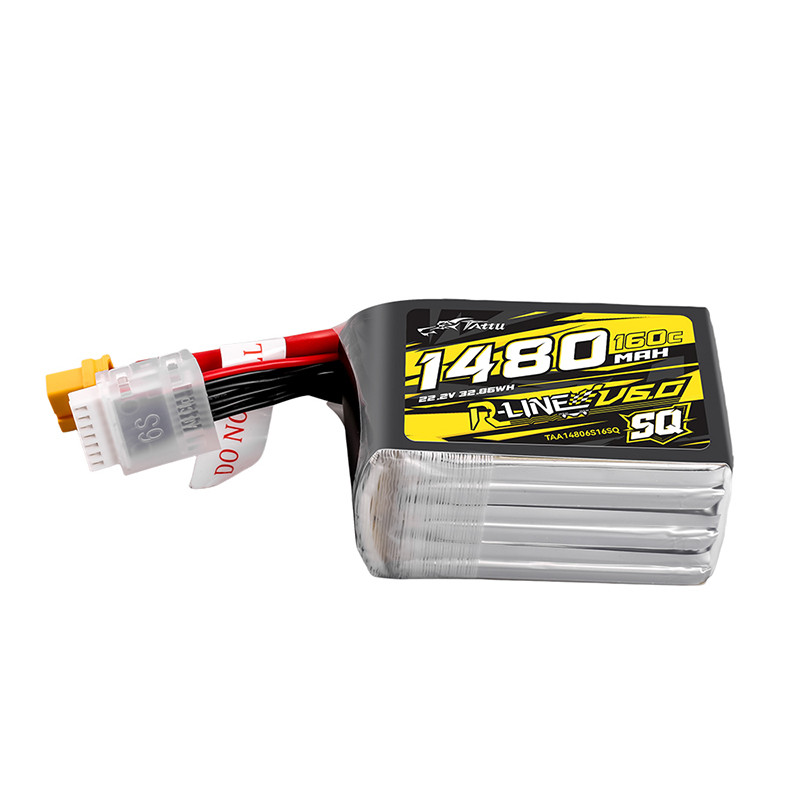
Example pack: our Tattu R-Line V6 1480 mAh 6S — this post explains what that “6S” means
The pack was on the table. Sticker said 6S. We knew we had ordered that. What it actually means — and why you must not treat it like a laptop battery — was fuzzier. So this: what 1S to 6S is, which voltages go with it, how to charge, and which protections you do and don’t have.
The concrete first pack lives at Tattu 1480 6S. Power split: power & capacitors. Charger pick: 6S LiPo charger.
What “S” means (and why it matters)
S = series = cells end to end.
Each LiPo cell is one chemical battery. Put more in series and pack voltage goes up. Capacity in mAh stays that of one cell — it does not add. That felt counterintuitive at first. It just is.
Rule of thumb: pack volts ≈ S-count × cell volts. Our pack: 6 × ~3.7 V nominal ≈ 22.2 V. Full: 6 × 4.2 V = 25.2 V.
P (parallel) shows up too: 6S2P = two parallel strings of 6 cells. Voltage stays 6S; mAh roughly doubles. Our first pack is plain 6S1P (usually just called “6S”).
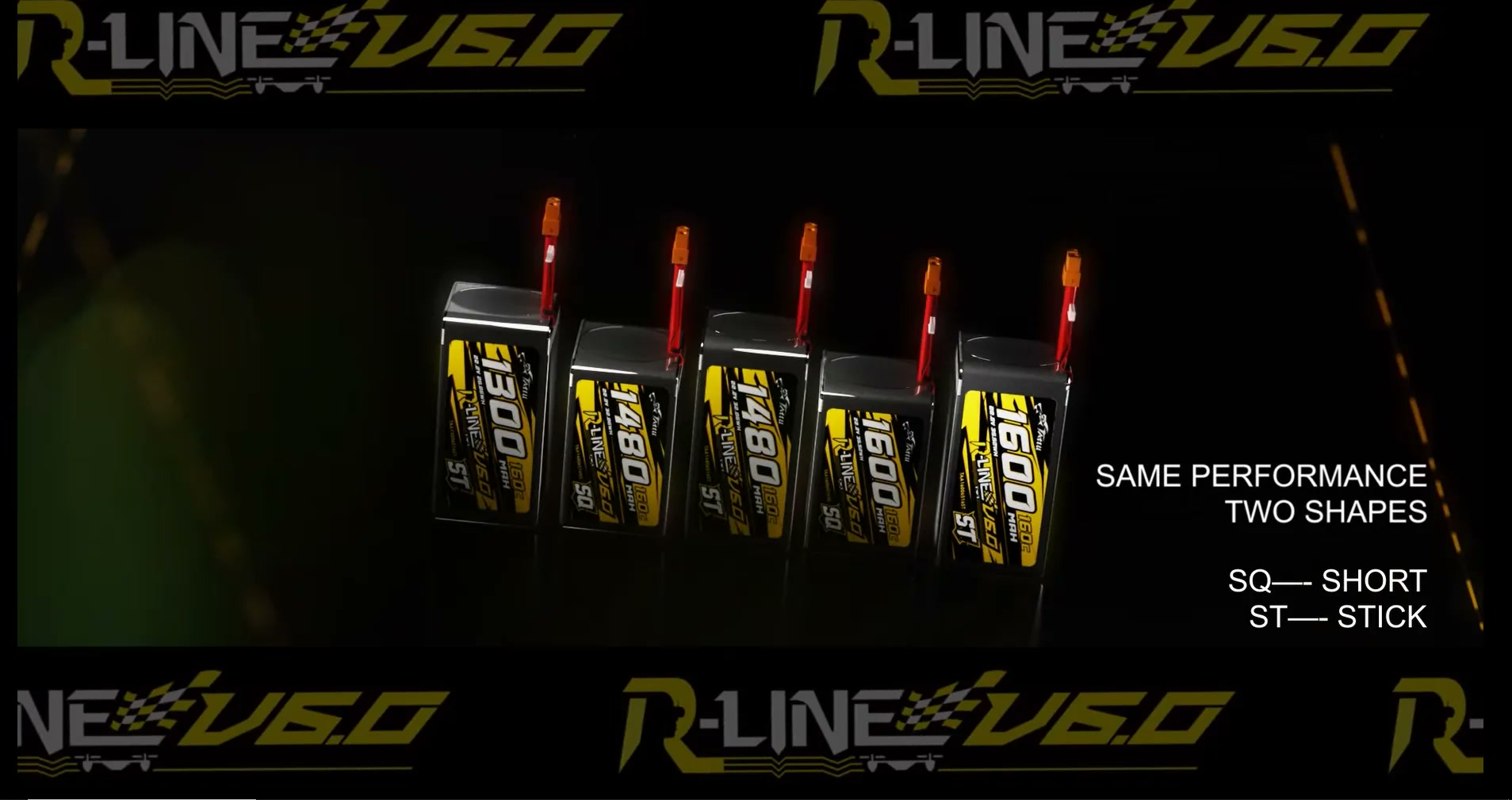
Same chemistry, different shape — voltage follows the S-count, not SQ/ST
1S/2S is mostly whoops. 4S is classic 5″ freestyle. 6S is common on many 7–10″ long-range builds — including our UL8.
Cell voltage: empty, storage, full
LiPo hates going too low and too high. Under load, voltage sags. A “empty” reading after landing differs from the bench. Watch cell voltage (balance lead / telemetry), not only “the pack feels soft”.
Guidelines per cell (and ×6 for our pack):
- Never lower than ~3.0 V (damage / fire risk) → on 6S ~18.0 V. Stop flying earlier.
- Land / cut-off typically ~3.5–3.6 V under load → ~21.0–21.6 V.
- Storage (not flying): ~3.80–3.85 V → ~22.8–23.1 V.
- Nominal 3.70 V → 22.2 V.
- Full after balance charge: 4.20 V → 25.2 V.
- Never above 4.20 V/cell.
In ArduPilot we set BATT_* failsafes later — ArduPilot settings. ESCs often have a low-voltage cutoff too. Those two must not fight each other. Exactly how? We don’t know yet until we test on the bench.
Capacity (mAh) and C-rating
mAh = how much “fuel”. 1480 mAh is small and light → short flights — good for first flight. C-rating (e.g. 160C) = how hard the pack may briefly deliver current. Maker claims are often optimistic. For us: enough headroom for 8″ + 6S peaks, plus tidy wiring and an ESC capacitor.
More mAh = longer airtime = more weight. Later we may look at Li-ion long-range packs; first this LiPo pack for first flight.
Charging — and the awkward fact
Status (2026-09-13): we still have no FPV balance charger. Buy one that handles 6S XT60 + JST-XH first. Pick: Choosing a 6S LiPo charger (ours: HOTA S6; budget: D6 Pro). Also BOM and tools.
FPV LiPos usually have no BMS like a laptop battery. You (and the charger) are the protection. That sounds strict. It is.
Once the charger arrives:
- Mode: LiPo Balance Charge, 6S (not “Li-ion” unless it really is Li-ion).
- XT60 and the balance lead (JST-XH). Both.
- End voltage: 4.20 V/cell.
- Current: start around 1C (1480 mAh ≈ 1.5 A). Faster only if you know what you’re doing.
- Done? Pack off the charger. Don’t leave it at 4.20 V for days → storage (~3.8 V/cell).
- Never charge unattended. Firebag. Hard surface. Not on a hollow desk.
After a flight: don’t slam a full charge if you won’t fly again today. Cool down first, then storage or charge.
Balancing = pulling every cell to the same voltage. Without balance, cells drift → one cell too high or too low while the pack “average” looks fine. That is dangerous.
Why we chose 6S
Our Pacer 60A V2, F100 1100KV and O4 Pro (7.4–26.4 V) are 6S-friendly. Higher voltage = lower current for the same power = thinner wiring and less heat — until motor KV and props are overdriven. So 6S fits this 8″ stack; not because “more S is always better”.
Red flags — retire the pack
- Swollen (“puffy”)
- Hot after light use or while charging
- Damaged connector or balance lead
- One cell structurally much lower/higher than the rest
- Got wet or took a hard hit
Doubt = don’t fly; dispose safely (LiPo recycle / emergency services advice if it’s a real emergency).
Reference — S-count voltages
| You write | Cells in series | Nominal (≈) | Fully charged (≈) |
|---|---|---|---|
| 1S | 1 | 3.7 V | 4.2 V |
| 2S | 2 | 7.4 V | 8.4 V |
| 3S | 3 | 11.1 V | 12.6 V |
| 4S | 4 | 14.8 V | 16.8 V |
| 6S | 6 | 22.2 V | 25.2 V |
Reference — cell voltage on 6S
| State | Per cell (guideline) | On 6S (≈) |
|---|---|---|
| Never lower (damage / fire risk) | ~3.0 V (hard floor; stop flying earlier) | ~18.0 V |
| Land / in-air cut-off (typical) | ~3.5–3.6 V under load | ~21.0–21.6 V |
| Storage (not flying) | ~3.80–3.85 V | ~22.8–23.1 V |
| Nominal | 3.70 V | 22.2 V |
| Full (after balance charge) | 4.20 V | 25.2 V |
| Never higher | >4.20 V | overcharge |
Reference — protections: what guards what?
| Layer | What it does | On our build |
|---|---|---|
| You + charger | Correct mode, S-count, current, supervision | Mandatory |
| Balance charge | Keep cells even | Always when charging |
| Firebag / Bat-Safe | Contain a fire while charging/storing | Recommended |
ArduPilot BATT_* |
Land / RTL on low voltage or high current | Set before first flight |
| ESC LVC | Cut motors when too low | Check ESC defaults |
| BMS in the pack | Cell protect, common on “smart” / consumer packs | Usually not on raw FPV LiPo |
| PM02D | Measures V/A for the FC | Power module |
Short: a Tattu-style FPV pack will not save itself if you put 2S on a 6S charger or keep flying a puffy cell.
Charge & fly checklist
- [ ] Charger on LiPo 6S balance
- [ ] Balance lead plugged in
- [ ] Firebag + supervision
- [ ] After charge: cells ≈ even (±0.03 V OK; bigger spread = investigate)
- [ ] Before flight: warm? No. Puffy? No.
- [ ] Telemetry / OSD: pack volts visible
- [ ] Land before ~3.5 V/cell under load (conservative)
- [ ] Storage charge if you won’t fly for days
Read next
- Tattu R-Line V6 1480 mAh 6S — our first pack
- Power & capacitors · XT60 connections
- PM02D · Step 2 — FC & power
- ArduPilot settings —
BATT_*failsafes - Choosing a 6S LiPo charger — watts, price, our pick
- Tools — charger / firebag
Choice log
| What | Explainer post: LiPo S-count, voltage, charging, safety |
| Why | Shared language for everyone working on UL8 power — including us |
| Our choice | 6S LiPo for first flight (Tattu 1480); balance charge; storage; firebag; ArduPilot batt failsafe |
Photos