


ExpressLRS — how it works, flashing & EU/NL
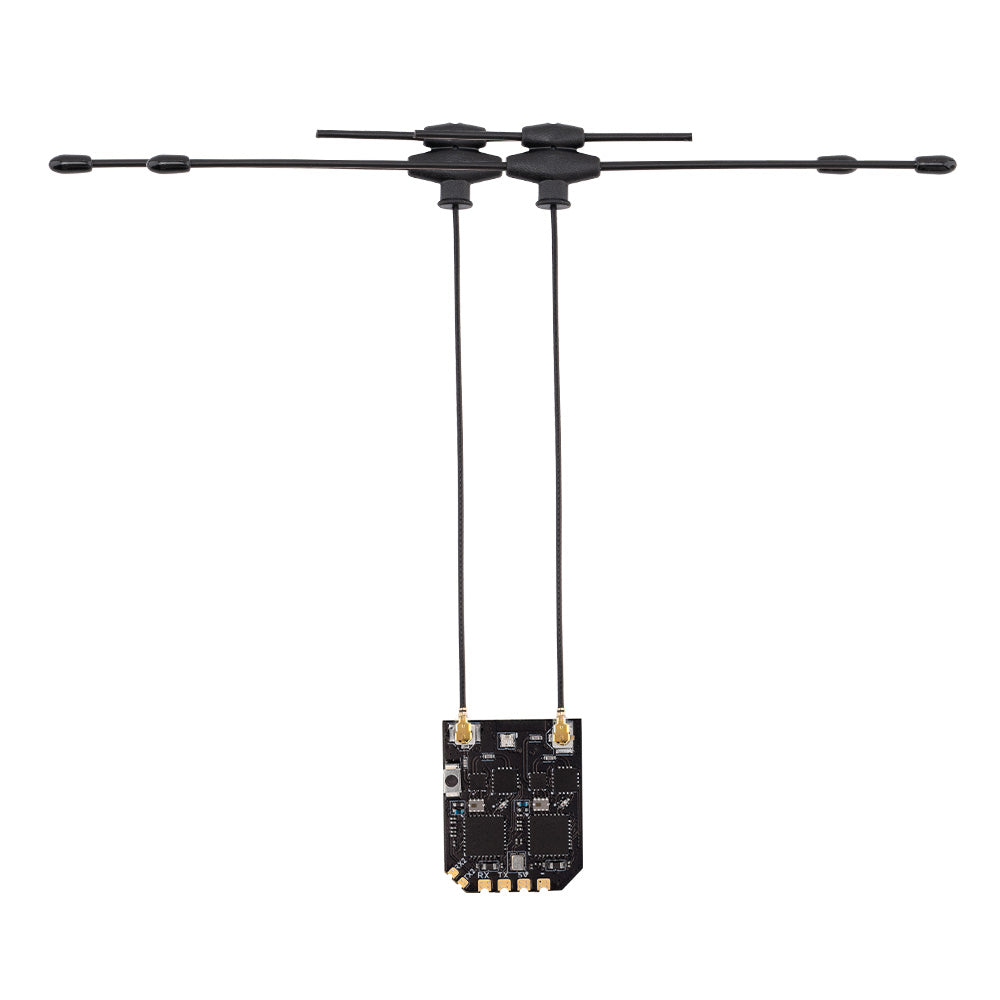
RadioMaster XR4 — our ELRS receiver
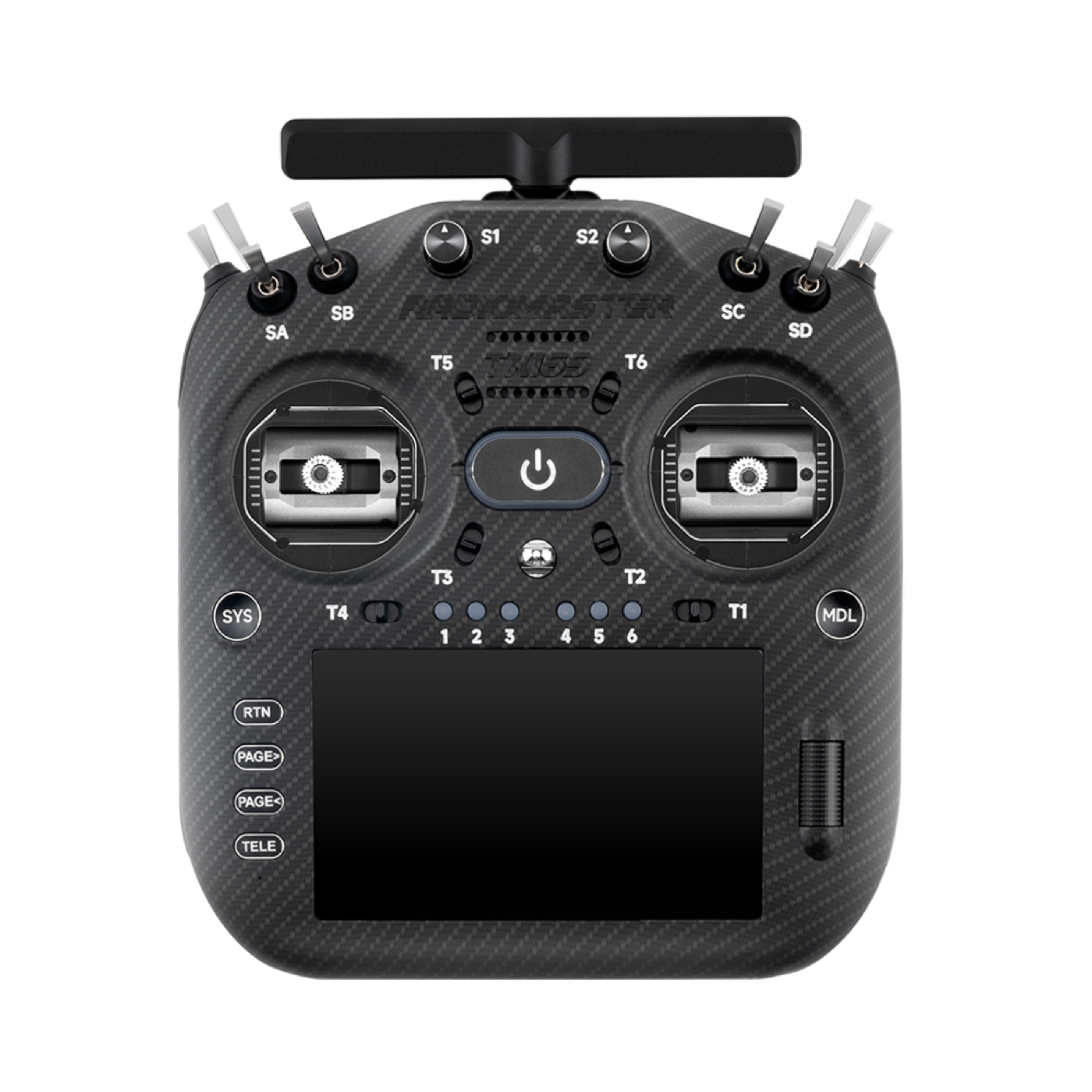
TX16S MK3 MAX — internal Gemini-X ELRS
The TX16S was ready. So was the XR4. Then the beginner question (ours): how does that handset actually talk to the Pixhawk — and what’s legal in the Netherlands?
ExpressLRS (ELRS) is that radio link. Here: how it works, how we flash, how we set it up, and what is sensible in NL/EU. Background: ExpressLRS explained. Process: step 4 — radio.
How ExpressLRS works
ELRS is open-source RC over LoRa-style radios. In our stack:
Transmitter (TX16S internal ELRS)
   ↕  air: 2.4 GHz and/or Sub-G (Gemini / Xrossband)
Receiver (XR4)
   ↕  wire: CRSF @ ~420 kbaud
Flight controller (Pixhawk TELEM2 / SERIAL2)
   ↕  ArduPilot reads sticks + sends telemetry back
A few terms that keep coming back:
- Binding phrase — shared secret in TX and RX. Same phrase = bind without buttons. Keep it unique. (First time: flash = put firmware on the device.)
- Packet rate — how often sticks go over the air (50 / 100 / 250 / 500 Hz). Higher = lower latency, less range.
- CRSF — protocol between RX and FC. Not SBUS for this build.
- Telemetry — LQ, RSSI, SNR, battery; optional Yaapu back to the radio.
- Dynamic power — TX raises power only when the link needs it.
- Gemini / Xrossband — 2.4 + Sub-G together for redundancy.
Failsafe: lost link → RX stops valid CRSF → ArduPilot failsafe. Always test with props off. Do not share XR4’s UART with the LiDAR — details: ports & wiring.
What we choose (and why)
We stick with CRSF on TELEM2. Not SBUS. MAVLink-over-ELRS is not the default until we fly safely — but it’s already written up: QGC + backpack checklist.
Target: ELRS 4.1.0 on TX and XR4. Tool: ExpressLRS Configurator 1.8.3. See firmware.
Regulatory in NL/EU: EU CE / LBT (2.4) + EU868 (Sub-G). Not FCC firmware for flying here. “Max hardware power” sounds tough; here it is often illegal.
What we do
Update (flash)
- Props off; model safe.
- Note binding phrase, packet rate, power.
- Update the Configurator.
- Flash TX first, then XR4.
- Same phrase + same ELRS major (4.x) on both.
- Power-cycle; check Lua + LQ in QGroundControl.
TX16S: target RadioMaster TX16S MK3 / internal Gemini-X. EdgeTX Passthrough or WiFi. Or web flasher.
XR4: target RadioMaster XR4. WiFi (http://10.0.0.1 / elrs_rx.local) or UART. Do not mix 3.x and 4.x — feels “almost the same” until nothing binds.
Configurator: GitHub releases.
First bind
- Handset on, Internal RF = CRSF.
- SYS → Tools → ExpressLRS Lua.
- Power RX (or 3× power-cycle without phrase).
- Lua → Bind (with phrase, usually auto).
Lua settings (this build)
| Setting | Advice |
|---|---|
| Packet rate | Start 250 Hz or 150 Hz; lower for range |
| Telem ratio | Default / 1:8–1:16 |
| Switch mode | Hybrid/wide; flight modes often CH12 |
| Power | Cap per EU; Dynamic on |
| Model match | Optional |
| RF band / Gemini | EU domains only |
Wiring XR4 → Pixhawk
XR4 5V  → TELEM2 5V
XR4 GND → TELEM2 GND
XR4 TX  → TELEM2 RX
XR4 RX  → TELEM2 TX
ArduPilot (CRSF — our default)
On SERIAL2 (TELEM2):
SERIAL2_PROTOCOL = 23     # RCIN / CRSF
RSSI_TYPE = 3             # ReceiverProtocol
RC_OPTIONS bit 13 = 1     # 420 kBaud ELRS
RC_OPTIONS bit 9  = 1     # Suppress CRSF rate messages
RC_OPTIONS bit 8  = 1     # Yaapu passthrough (+256)
FLTMODE_CH = 12           # common with ELRS hybrid
Power-cycle FC. Calibrate radio. Test failsafe. Param progress: ArduPilot settings.
Later: QGC in the air (MAVLink-over-ELRS)
On the bench, QGroundControl talks over USB. In the air it doesn’t — unless MAVLink rides the same ELRS link.
Our path (TX16S internal module):
- ArduPilot:
SERIAL2_PROTOCOL = 2,SERIAL2_BAUD = 460,RSSI_TYPE = 5(+SR2_*stream rates). - ELRS Lua: Link Mode = MAVLink (RX off briefly; Hybrid/16ch; telem locked at 1:2).
- Lua → Backpack → Telemetry = WiFi (do not manually “Enable Backpack WiFi”).
- MacBook on backpack AP (
expresslrs) → QGC UDP auto-connect (port 14550).
Sticks stay on the TX16S. QGC = telemetry, modes, RTL, missions. Full checklist: mavlink-qgc-checklist.md. Upstream: expresslrs-mavlink.md.
Specs — EU/NL
Not legal advice. You remain responsible.
| Band | Choose in Configurator | Avoid in NL/EU |
|---|---|---|
| 2.4 GHz | EU CE / LBT | FCC without LBT |
| Sub-G (868) | EU868 | FCC915 / AU915 |
| Band | Typical EU firmware |
|---|---|
| 2.4 GHz | Soft-cap 100 mW; LBT above 10 mW |
| 868 MHz | Stricter — often ~25 mW on Sub-G |
Keep Dynamic power on. LBT = listen before talk. Busy ISM can mean slightly more packet loss. Normal — not a reason for FCC firmware.
Checklist before first flight
- [ ] TX + XR4 on ELRS 4.x, same binding phrase
- [ ] Domain EU CE LBT (+ EU868 if Sub-G)
- [ ] Power ≤ CE limit, dynamic on
- [ ] XR4 on TELEM2,
SERIAL2_PROTOCOL = 23 - [ ] Sticks in QGroundControl; failsafe tested
- [ ] Flight modes on the intended channel (often CH12)
- [ ] (Later) MAVLink + backpack → QGC in the field — checklist
Local docs: mavlink-qgc-checklist.md · expresslrs-ardupilot-setup.md · yaapu-passthrough-crsf-elrs.md
Read next
- ExpressLRS explained — what ELRS is, 3 vs 4
- XR4 · TX16S
- Ports & wiring · Firmware
- Step 4 — radio
- Cursor + ArduPilot
Sources: ExpressLRS docs · ELRS ArduPilot setup · Binding · User defines · Oscar Liang · ArduPilot CRSF
Choice log
CRSF on TELEM2 · ELRS 4.1.x · EU CE LBT + EU868 · Gemini/Xrossband. Sticks + telemetry, fits scarce Mini ports — and we fly here, so no FCC “because we can”.
Photos